Showing posts with label Lower Austria. Show all posts

Thursday, November 27, 2014

Melk (16th July 2014)


The City of Melk is part of Lower Austria and is loacted next to the Wachau valley along the Danube River (die Donau). It is the home of the iconic and massive baroque Benedictine monastery, Stift Melk (Melk Abbey).

Decided to come here because I missed out on the water rafting trip with most of my friends and also because Sankt Pölten was quite disappointing. I figured there had to be something in Lower Austria worth seeing and sure enough, this little city of Melk, with only just over 5,200 people living here, proved to be the one I was looking for.

For me, Melk is all about the Melk Abbey and the River Danube. Was a day well spent admiring the amazing architecture of the abbey and then relaxing along the Danube River, enjoying the nice river breeze :)


Entering the massive Melk Abbey after a short climb up the hill from the city centre. Somehow the photos don't seem to show how huge it is, but trust me, it's really really huge!
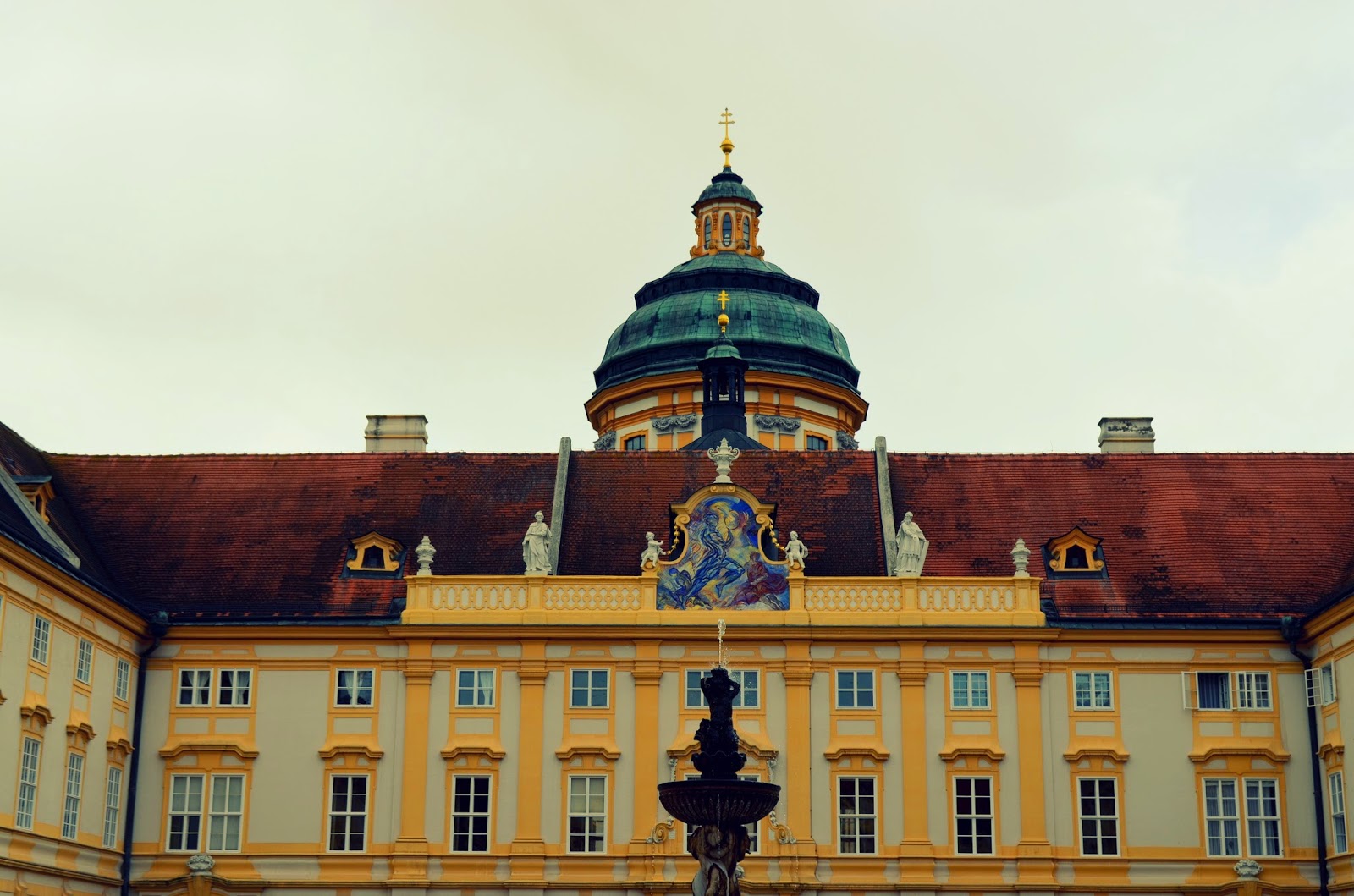

The Melk Abbey is considered to be one of the world's most famous monastic sites. The dome seen here is over 60 metres high.


Once you enter the monastery church, you'll see how beautiful it is. This photo doesn't really do it justice but it's good enough to depict the very typical high baroque style it was built in.


Both the interior and exterior of the Melk Abbey are really beautiful. The lighting that day made helped me quite a bit as well as it amplified the unique yellowish glow the abbey had.
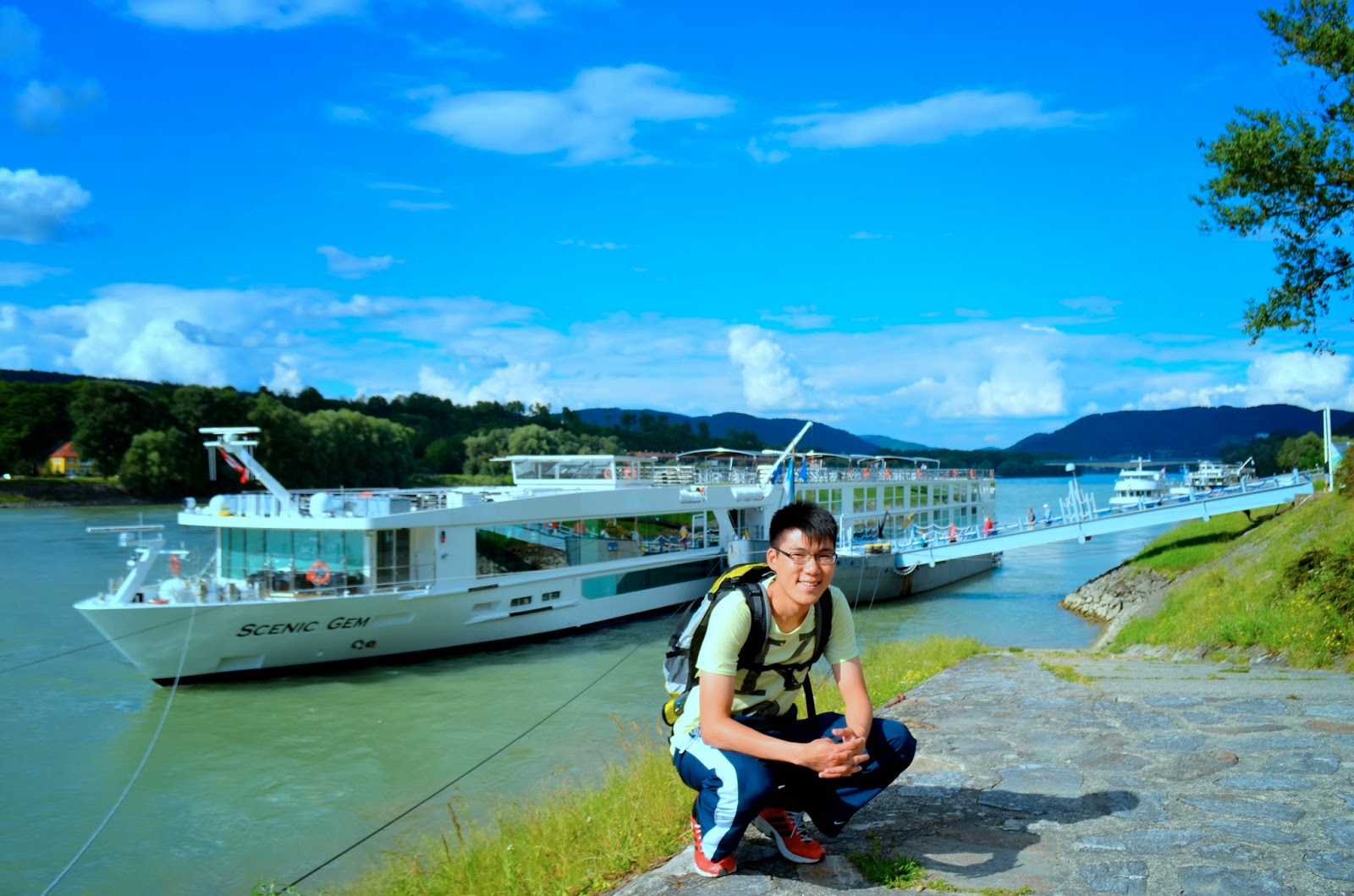

They did say that Melk was along the Danube River, so even if it takes quite a while to walk to the river, you have to go there. I was starting to wonder where the people of Melk were. Then I realized they were all relaxing by the river.


Now it does look blue... The Blue Danube! Enjoying the breeze while relaxing by the river as well as the late afternoon sun.


The little port along the Danube River has some ferries that take tourists for a cruise along the Danube. Not bad, when it's a windy day :)


It turns out that the sunlight wasn't staying for long... After heading back towards the abbey from the Danube River, the rain clouds were already on its way...


The Stadtpfarrkirche (Parish Church of the Assumption), which is very much different from the Melk Abbey itself, as you can see.
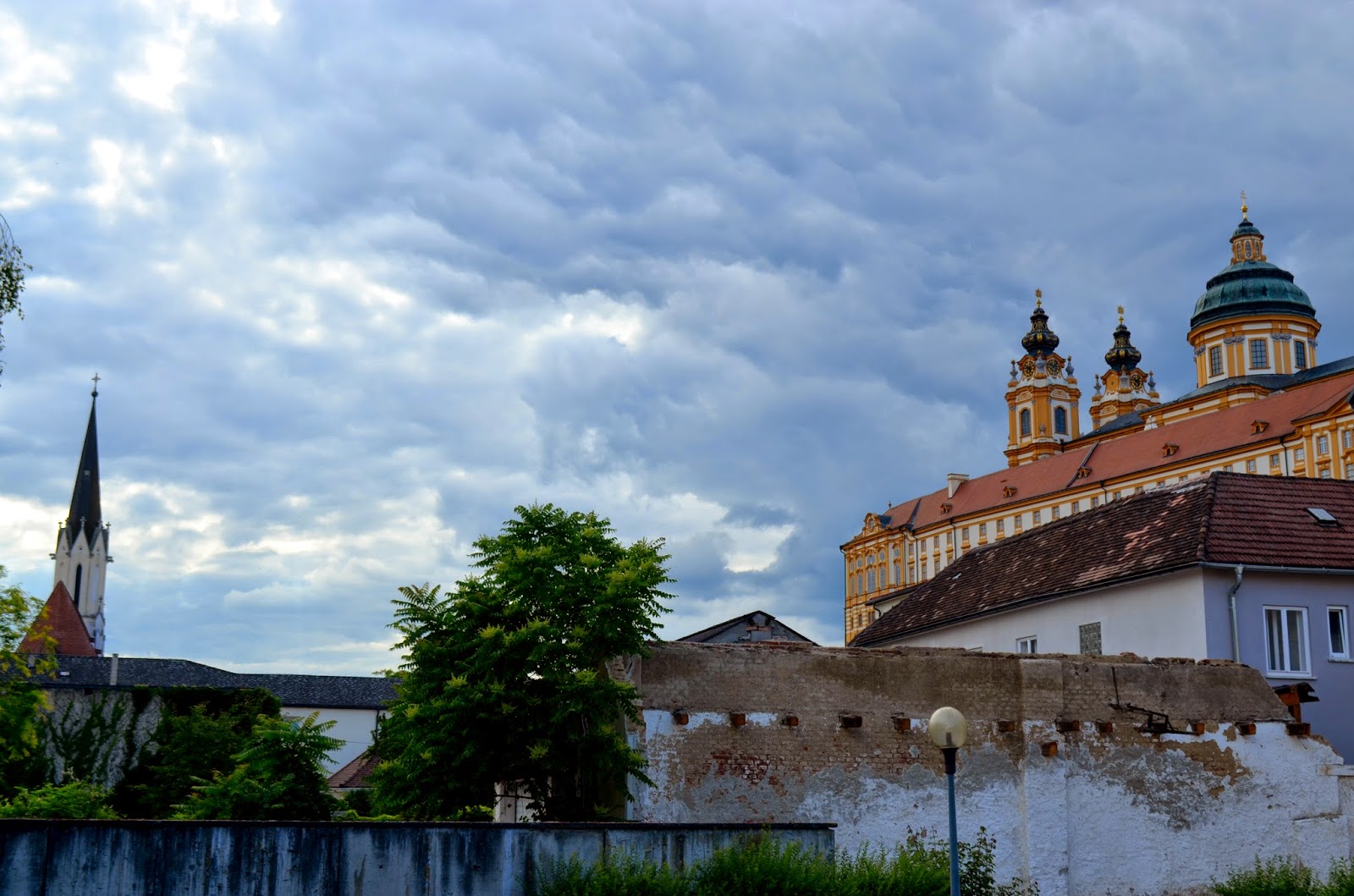

Due to the "massiveness" of the Melk Abbey, this is the best I could do to get both the abbey and the Stadtpfarrkirche in the same photo.


Was a wonderful day spent in Melk. The beauty of the Melk Abbey was well worth the really long train ride up from Graz here. Relaxing along the Danube River was really nice too. Thanks for the wonderful day, Melk. Auf Wiedersehen!


This is how massive the abbey is... Was waiting at the Melk Stadtpark for my train and you could still see that it's still quite big even though it's in the distance...


Was a wonderful day spent in Melk. The beauty of the Melk Abbey was well worth the really long train ride up from Graz here. Relaxing along the Danube River was really nice too. Thanks for the wonderful day, Melk. Auf Wiedersehen!

Tuesday, November 25, 2014

Sankt Pölten (13th June 2014)


Sankt Pölten, capital of Lower Austria, the northeastern and largest state of Austria. Not sure if I've mentioned it previously, but I made a decision to travel to as many of the state capitals of Austria just to see as much of Austria as possible. Every capital is different from the other, some more special and unique with iconic architecture while there are others which don't have much that stands out. Sankt Pölten belongs to the latter category.

Although it is considered a city with hardly any touristic interest, it's conveniently located near Wien and the surrounding lakes are worth a visit just to relax.

The album cover features the Sankt Pölten Baroque Cathedral, which used to be a Romanesque basilica.

(13th June 2014)


Taken from the Rathaus, which also serves as the Tourist Information Office: the Franziskanerkirche in the background with the Trinity Column in the middle of Rathausplatz.


The Sankt Pölten Rathaus (Town Hall). Not sure which building is symbol of Sankt Pölten's old town, but I suppose this could be it?


The Ehemalige Synagogue, a former synagogue, if what I heard from the people around is true. It is the only Jugenstil synagogue in Lower Austria. According to them, it is now a memorial that commemorates the vibrant Jewish community here.


That's it for the architecture from the olden days, although the synagogue is not exactly that old since it was built in 1913. Anyway...

After a stroll through the many parks around the area, I finally found the symbol the city, the Klangturm (Tower of Sound)! Oh, and this is also the Landhaus (Government) and cultural district where all the modern architecture is located.

So, welcome to the modern sector of Sankt Pölten!


The Festspielhaus St. Pölten. The Festival Theatre in Sankt Pölten is regularly used for music theatre and dance performances since its opening in 1997. It is the residency of the Tonkünstlerorchester Niederöstereich (Orchestra of Lower Austria).


Located just adjacent to the Festspielhaus is the Landesmuseum Niederöstereich (State Museum of Lower Austria). It's a multimedia museum, so its as modern as the district suggests.


After baking for far too long in the sun, I needed some shade and a rest so I retreated to the Hammerpark nearby. Nothing too special here other than 2 little kids having fun at the playground. Reminds me of the good old days...


Der Klangturm und das Landhaus (Government Quarters) with the Traisen River in the background. Apparently, there was some sort of flooding here in 1997 when the water levels of the Traisen rose. Wonder where the government fled to then?


Along Wiener Straße and looking back at the bridge along Niederöstereichring with the Landhaus and the Klangturm.


Sankt Pölten may be the capital of Lower Austria, but unlike most European cities, it seems like the old town has been neglected, which is perhaps the reason why it doesn't have much touristic interest. Still, the modern architecture around the city are all rather impressive. Honestly, I'm more impressed with the Hauptbahnhof building then the buildings in the old town. I seem to remember going back to Graz after this to get ready to support Netherlands against Spain. We all know what happened after...


Roaring like a Dutch lion after the 5-1 win over Spain!